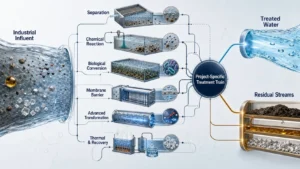
Industrial wastewater treatment methods perform different jobs. Screening removes coarse solids, dissolved air flotation separates suitable oils and light flocs, biological treatment converts biodegradable organics, membranes separate selected particles or dissolved constituents, and thermal processes concentrate water or recover materials.
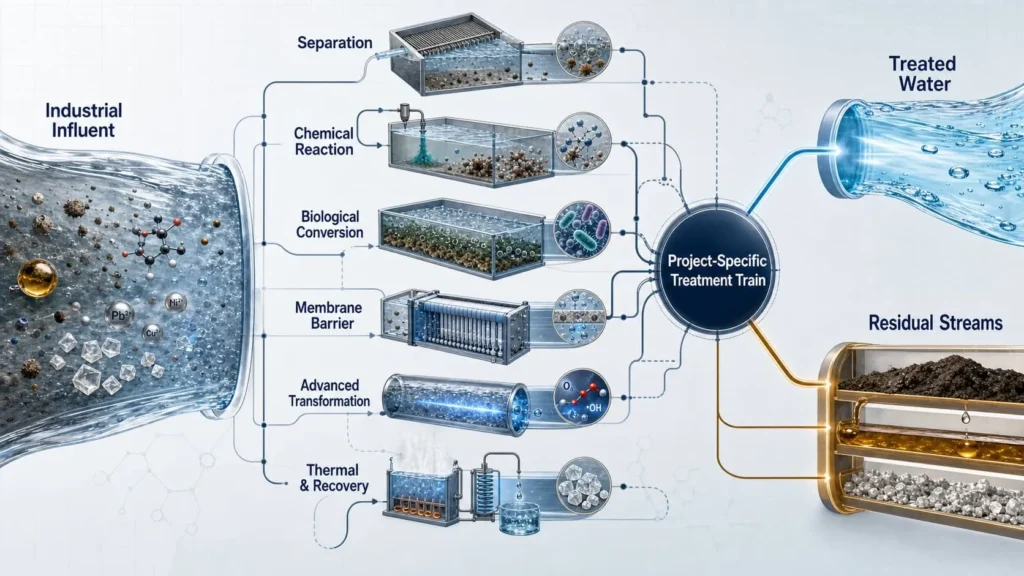
A reliable industrial wastewater treatment process rarely depends on one method. It combines treatment duties according to influent characteristics, discharge or reuse targets, site conditions, operating resources and the residual streams that must be managed.
Quick Answer
Industrial wastewater treatment methods can be organized into six practical families: physical and mechanical separation; chemical and physicochemical treatment; biological treatment; membrane separation; advanced treatment; and thermal, recovery or zero liquid discharge routes. The familiar physical, chemical and biological categories remain useful, but the six-family framework makes membranes, advanced processes and recovery routes easier to compare by application, advantage, limitation and residual stream.
What Are The Main Industrial Wastewater Treatment Methods?
The main types of industrial wastewater treatment include separation, conversion, concentration and recovery methods. The right classification depends on whether the question is about a treatment mechanism, an engineering duty or a complete treatment train.
Three Traditional Categories And Six Engineering Method Families
Physical, chemical and biological treatment are the three traditional categories. They provide a clear introduction to wastewater treatment, but they compress several technically different duties into broad groups.
An engineering comparison benefits from six families:
- Physical and mechanical separation
- Chemical and physicochemical treatment
- Biological treatment
- Membrane separation
- Advanced treatment, including advanced oxidation and selected electrochemical processes
- Thermal, recovery and zero liquid discharge routes
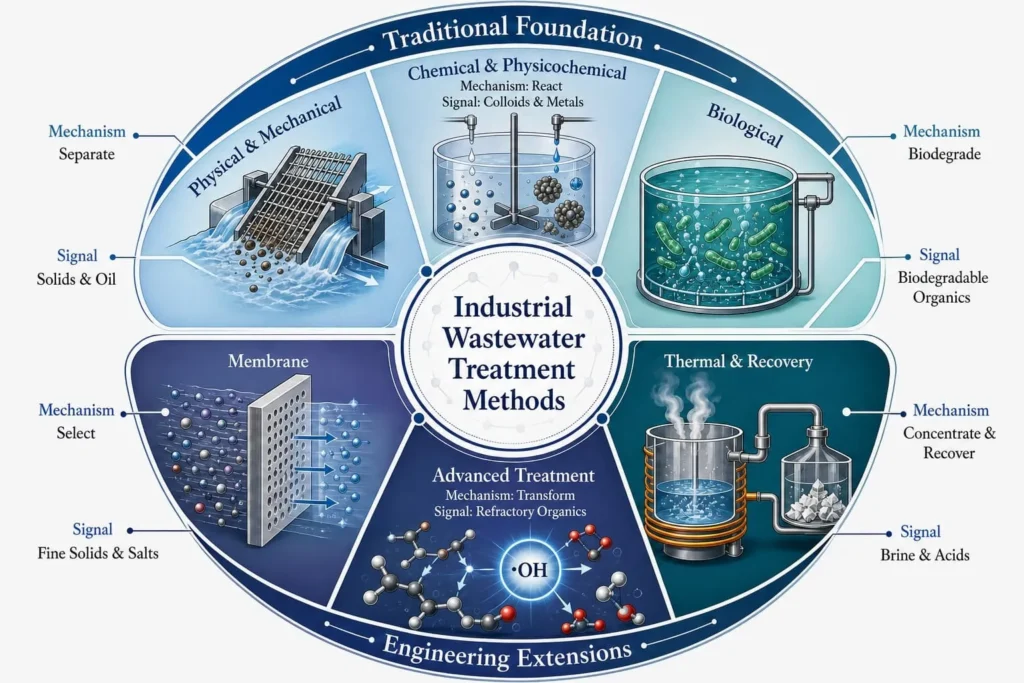
This expanded framework does not contradict the traditional three categories. It separates methods that differ substantially in pressure, energy, reagents, control requirements, residuals and project role. For example, reverse osmosis and evaporation both reduce the volume of a water stream, but their operating constraints and resulting residuals are very different.
The U.S. EPA Industrial Wastewater Treatment Technology Database also distinguishes individual treatment technologies from ordered treatment systems. Its technology list illustrates the range of unit operations used across industrial sectors. Review the EPA treatment technology definitions.
Industrial Wastewater Treatment Methods Comparison
Use the comparison to identify plausible treatment roles, not to select a final process. A method that fits one pollutant signal may be unsuitable for another constituent in the same wastewater.
| Method Family | Often Evaluated For | Common Processes | Main Advantage | Main Limitation |
|---|---|---|---|---|
| Physical and mechanical | Coarse solids, grit, free oil, suspended solids and separable flocs | Screening, sedimentation, oil separation, DAF and filtration | Direct separation with a clear treatment duty | Usually does not remove dissolved salts or all dissolved organics |
| Chemical and physicochemical | Unstable pH, colloids, emulsions, metals and selected dissolved pollutants | Neutralization, coagulation, precipitation, adsorption and ion exchange | Can change pollutants into a separable or less reactive form | Reagent demand and chemical sludge or spent media |
| Biological | BOD, biodegradable COD, ammonia and suitable organic loads | Activated sludge, MBBR, MBR, aerobic and anaerobic treatment | Suitable for continuous conversion of biodegradable pollutants | Sensitive to toxicity, salinity, temperature and load variation |
| Membrane | Fine particles, biomass, selected dissolved substances, salts and reuse duties | MF, UF, NF and RO | Can produce a high-quality separated water stream | Fouling, cleaning and concentrate management |
| Advanced treatment | Color, refractory organics, poor biodegradability and selected residual pollutants | Ozonation, Fenton-type oxidation, UV-based AOPs, electrocoagulation and microelectrolysis | Can transform pollutants that resist conventional treatment | Water-matrix sensitivity, reagent or energy demand and test requirements |
| Thermal, recovery and ZLD | High salinity, brine, mixed acids, concentration and recovery objectives | Evaporation, crystallization and selected material-recovery processes | Concentrates water streams and may support water or material recovery | Energy, scaling, corrosion and final solids management |
Method duties come before equipment names. Once the duty is defined, engineers can compare equipment configuration, construction material, control strategy and residual handling.
Conditioning And Supporting Operations
Some essential operations stabilize the wastewater without directly removing much pollutant mass. They should not be mistaken for a complete treatment method.
- Source segregation: keeps incompatible, high-strength or recoverable streams separate.
- Flow equalization: buffers hydraulic peaks and short-term concentration changes.
- Load balancing: reduces shock loading on downstream chemical or biological units.
- pH conditioning: brings wastewater into a range required for reaction, separation or biological stability.
- Temperature adjustment: protects temperature-sensitive treatment steps.
- Mixing and buffer storage: maintain uniform conditions and controlled feed rates.
These operations can improve downstream stability, dosing control and treatment performance. Equalization does not make pollutant mass disappear; it changes when and at what concentration the downstream process receives it.
Compare Six Treatment Method Families
Physical And Mechanical Separation
Typical role: Separate material that can be screened, settled, floated, filtered or otherwise divided from the main water stream.
Often evaluated for: Coarse solids, grit, fibers, free oil, suspended solids, light flocs and particulate matter.
Common processes: Screening, grit removal, gravity oil-water separation, sedimentation, clarification, dissolved air flotation, media filtration, centrifugal separation and hydrocyclones.
Advantages: The separation duty is direct and observable. These methods can protect pumps, reactors, membranes and downstream biological processes from unsuitable solids or oil loads.
Limitations: Physical separation normally leaves dissolved salts and many dissolved organic compounds in the water. Particle size, density, surface properties and emulsion stability determine whether a contaminant can be separated.
Residual and cost drivers: Screenings, grit, settled sludge, DAF float sludge and filter backwash require collection and disposal or further dewatering. Pumping, recycle flow, air or gas systems and solids handling drive operation.
Dissolved air flotation is fundamentally a flotation separation process. In industrial applications it is often combined with coagulation and flocculation to destabilize emulsified oil and colloids. Depending on the configuration, DAF may therefore be described as a physical or physicochemical process.
Chemical And Physicochemical Treatment
Typical role: Change pH, particle stability, solubility, oxidation state or affinity so a pollutant can be separated, neutralized or transformed.
Often evaluated for: Unstable pH, colloids, emulsified oil, heavy metals, phosphorus and selected dissolved organics or inorganics.
Common processes: Neutralization, coagulation, flocculation, chemical precipitation, oxidation-reduction, adsorption, ion exchange, chemical phosphorus removal and selected disinfection steps.
Advantages: Reaction conditions can be adjusted for a defined treatment duty. Coagulation can create separable flocs; precipitation can convert selected dissolved metals into solids; adsorption or ion exchange can capture selected dissolved constituents.
Limitations: Performance depends on speciation, pH, alkalinity, competing ions, reagent selection and the separation step that follows. One chemical treatment rarely addresses every pollutant in a mixed industrial stream.
Residual and cost drivers: Reagents, storage, dosing, mixing and pH control affect operating cost. Chemical sludge, regenerant, spent media and backwash require a defined handling route.
Biological Treatment
Typical role: Use microorganisms to convert biodegradable organic matter and, where the process is designed for it, nitrogen or other selected constituents.
Often evaluated for: BOD, biodegradable COD, ammonia and wastewater with a stable, biologically treatable organic load.
Common processes: Activated sludge, aerobic suspended-growth systems, attached-growth systems, MBBR, MBR, anaerobic treatment, IC and other high-rate anaerobic reactors, and biological nutrient removal.
Advantages: Biological processes can provide continuous treatment of suitable organic loads. Anaerobic treatment can serve as a major stage for selected medium- or high-strength biodegradable wastewater, while aerobic processes can provide further organic and nutrient treatment.
Limitations: Toxic compounds, extreme pH, high salinity, low biodegradability, temperature variation and shock loads can inhibit biomass. MBR separates biomass and suspended material through a membrane, but it should not be confused with nanofiltration or reverse osmosis for dissolved salt removal.
Residual and cost drivers: Aeration, mixing, temperature control, sludge wasting and nutrient balance affect operation. Aerobic systems produce excess biomass; anaerobic systems require appropriate gas, odor and safety management.
For suitable wastewater, an IC anaerobic reactor can be a core treatment stage rather than an auxiliary unit. Organic load, biodegradability, temperature, inhibitory compounds, hydraulic conditions and downstream targets determine whether that role is appropriate.
Membrane Separation
Typical role: Use a selective barrier to separate particles, microorganisms, molecules or ions according to membrane type and operating conditions.
Often evaluated for: Fine solids, biomass separation, dissolved constituents, salinity reduction, wastewater reuse and concentration before a downstream recovery step.
Common processes: Microfiltration, ultrafiltration, nanofiltration and reverse osmosis.
Advantages: Membranes can create a high-quality separated water stream and provide a compact barrier where the feed water and pretreatment are suitable.
Limitations: Fouling, scaling, chemical compatibility, pressure, recovery limits and membrane damage must be evaluated. Pretreatment may be required to protect the membrane.
Residual and cost drivers: Pressure, pumping, cleaning chemicals, membrane replacement and pretreatment affect lifecycle cost. Concentrate, backwash and cleaning waste remain part of the mass balance.
Membranes separate contaminants into different streams; they do not eliminate the contaminants. A reuse target therefore needs both a permeate-quality requirement and a viable concentrate-management route.
Advanced Treatment
Advanced treatment covers methods considered when conventional separation or biological treatment does not adequately address difficult or residual pollutants. Two groups require separate evaluation.
Advanced Oxidation Processes
Typical role: Transform refractory organic structures, reduce selected color-causing compounds, improve biodegradability before biological treatment or polish residual organics after it.
Common processes: Ozonation, catalytic ozonation, Fenton or Fenton-like oxidation, UV-based oxidation and other oxidation-polishing processes.
Advantages: AOPs can target compounds that resist conventional biological or separation methods.
Limitations: Wastewater composition, scavenging demand, pH, catalyst condition, mass transfer, contact time and reaction byproducts influence the result. Oxidation may transform a compound without fully mineralizing it.
Residual and cost drivers: Oxidant, energy, catalyst, reaction time, off-gas control and downstream neutralization or biological treatment can be material cost drivers. Bench or pilot testing is often necessary.
Electrochemical And Microelectrolysis Processes
Typical role: Destabilize particles, alter oxidation states or transform selected refractory pollutants before separation or downstream treatment.
Common processes: Electrocoagulation, electrooxidation, iron-carbon microelectrolysis—also written as iron-carbon micro-electrolysis—and related internal-electrolysis processes.
Advantages: These processes can combine redox reactions, coagulation effects and pollutant transformation in selected applications.
Limitations: pH, conductivity, wastewater composition, electrode or media condition, contact time and downstream separation affect performance. The specific mechanism and suitability must be established for the selected reactor and material.
Residual and cost drivers: Electricity, electrode or material consumption, chemical adjustment, sludge production and solids separation can affect operation. Bench or pilot testing should define response and downstream requirements.
Thermal, Recovery And ZLD Routes
Typical role: Remove water, reduce liquid volume, concentrate dissolved substances or recover selected water and materials.
Often evaluated for: High-salinity wastewater, membrane concentrate, brine, mixed acids and projects with defined water- or material-recovery objectives.
Common processes: Evaporation, crystallization, selected acid-concentration or recovery systems, and combined routes that support a zero liquid discharge target.
Advantages: Thermal and recovery processes can reduce liquid volume and, where water chemistry and economics support it, create reusable water or recoverable material streams.
Limitations: Scaling, corrosion, volatile compounds, foaming and complex concentrate chemistry can restrict recovery and equipment configuration. ZLD is a project objective, not one universal machine or treatment method.
Residual and cost drivers: Heat or electricity, pretreatment, cleaning, material selection, scaling control and solids handling drive lifecycle requirements. Evaporation concentrates the substances that do not leave with the vapor.
How Treatment Methods Commonly Fit Into Process Stages
A treatment method describes a mechanism. A process stage describes the duty and position of that method. A treatment train is the ordered combination of several units.
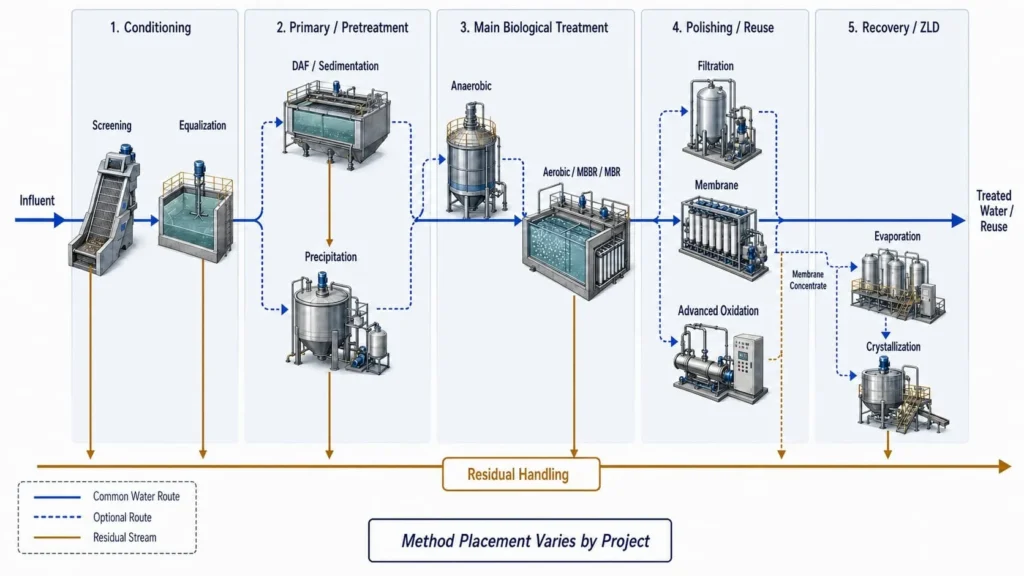
Preliminary, primary, secondary and tertiary treatment are familiar stage labels, but industrial projects do not follow one fixed sequence. The same technology may serve as pretreatment in one plant and polishing in another.
| Common Stage | Typical Duty | Methods Often Used | Important Qualification |
|---|---|---|---|
| Conditioning or preliminary treatment | Protect downstream units and stabilize feed conditions | Screening, grit removal, source segregation, oil separation, equalization and pH conditioning | Equalization and conditioning may stabilize flow without removing much pollutant mass |
| Primary treatment or pretreatment | Remove separable solids, oils, metals or inhibitory constituents | Sedimentation, DAF, coagulation, precipitation, filtration and selected oxidation or reduction | The duty depends on what the downstream process must be protected from |
| Secondary or main biological treatment | Convert biodegradable organics and selected nutrients | Aerobic treatment, activated sludge, MBBR, MBR and anaerobic reactors | Biodegradability, toxicity, salinity and temperature determine biological suitability |
| Tertiary, polishing or reuse treatment | Address remaining particles, dissolved constituents, color or reuse requirements | Filtration, adsorption, ion exchange, membranes, advanced oxidation and disinfection | Polishing requirements follow the actual discharge or reuse target |
| Recovery or ZLD stage | Concentrate streams, recover water or materials and manage final solids | RO concentration, evaporation, crystallization and selected recovery processes | Residual disposal, scaling, corrosion, energy and recovery value remain project-specific |
For example, DAF may protect a biological system from oil and suspended solids. Advanced oxidation may improve biodegradability before biology or polish residual organics after biology. Filtration may protect an RO system or serve as final particulate polishing.
Match Pollutants To Treatment Roles
A laboratory indicator can identify treatment duties that deserve evaluation, but it cannot select a complete system by itself. COD, for example, does not reveal whether the organic matter is particulate, biodegradable, refractory, volatile or already concentrated in a separate stream.
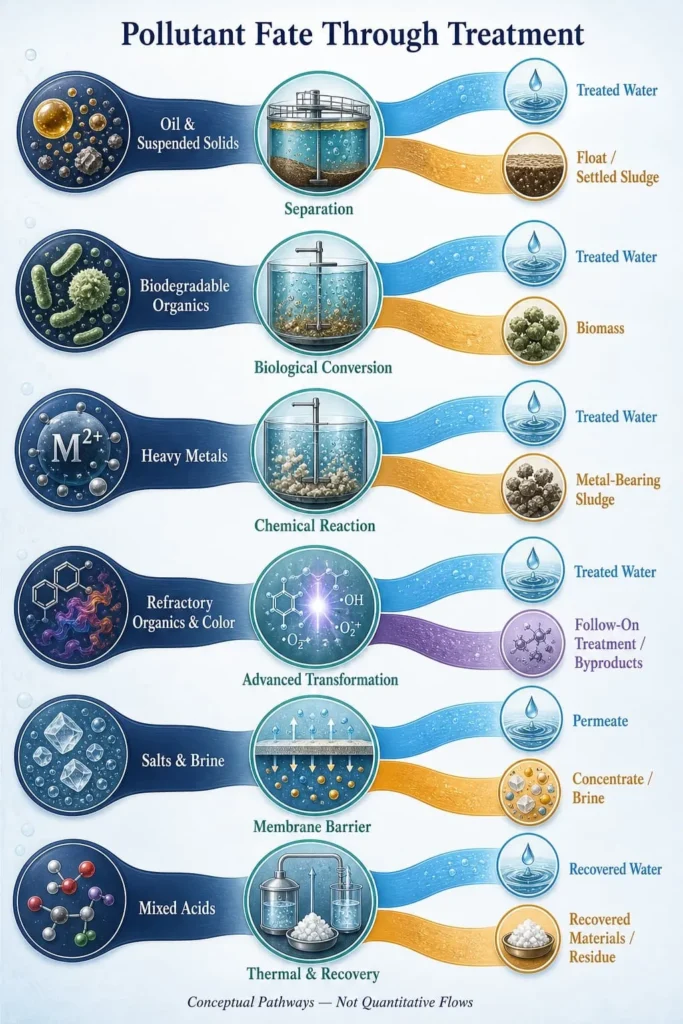
| Water-Quality Signal | Methods Often Evaluated | Main Question | Likely Residual Or Follow-On Duty |
|---|---|---|---|
| Coarse solids, fibers or grit | Screening, grit removal and mechanical separation | What size and mass loading must be removed? | Screenings, grit washing or disposal |
| Free oil, TSS or light flocs | Oil separation, coagulation, DAF, sedimentation and filtration | Is the oil free, dispersed or chemically emulsified? | Float sludge, settled sludge or backwash |
| Biodegradable COD or BOD | Aerobic or anaerobic biological treatment | What are the biodegradability, load variation and inhibition risks? | Biomass, gas management and downstream polishing |
| Heavy metals | Segregation, pH control, redox adjustment, precipitation, electrocoagulation, adsorption or ion exchange | Which metal species, concentration and chelating agents are present? | Metal-bearing sludge, spent media or regenerant |
| Color or refractory organics | Adsorption, advanced oxidation, catalytic treatment or selected electrochemical processes | Which compounds cause the color or poor biodegradability? | Reaction byproducts, sludge, spent media or biological polishing |
| High salinity or dissolved ions | Source segregation, NF, RO, evaporation, crystallization or recovery | What recovery is feasible before scaling or osmotic limits dominate? | Concentrate, brine, salts and final solids |
| Ammonia or nutrient load | Biological nutrient removal and selected physicochemical steps | Are carbon balance, temperature, alkalinity and inhibition suitable? | Biomass, chemical demand or polishing |
| Mixed acids or valuable concentrated streams | Segregation, concentration, separation and selected recovery processes | Does composition, contamination and recovery value justify recovery? | Recovered stream, concentrated residue and corrosion control |
Selection becomes more reliable when pollutant form is considered alongside concentration. Free oil and emulsified oil may require different pretreatment. Biodegradable COD and refractory COD may require different conversion routes even when the laboratory COD values are similar.
Illustrative Treatment-Train Examples
Illustrative role sequences—not project designs. Each sequence shows how several duties can connect. Actual industrial effluent treatment must follow wastewater testing, discharge or reuse targets and site constraints.
Oily or suspended-solids wastewater: Source segregation → equalization → free-oil separation where applicable → coagulation and DAF → filtration → biological or polishing treatment as required.
The separation steps address oil and solids that could interfere with downstream treatment. Emulsified oil, dissolved organics or salts may remain after DAF.
Biodegradable organic wastewater: Screening → equalization → anaerobic or aerobic biological treatment → clarification or membrane biomass separation → polishing or disinfection as required.
The main biological route depends on concentration, biodegradability, temperature, nutrients, toxicity and flow variation. An anaerobic stage may reduce suitable high organic loads before aerobic treatment.
High-salinity or concentrate stream: Source segregation → organic and scaling control → membrane concentration where feasible → evaporation → crystallization or managed residual disposal.
Recovery limits depend on the water matrix. Concentration increases the importance of scaling, corrosion, volatile compounds and final solids quality.
Compare Advantages, Limitations, Residuals And Cost Drivers
Fixed “low, medium or high” cost labels can be misleading because flow, pollutant concentration, utilities, material selection and residual disposal change the result. The more useful comparison is what primarily drives cost and operational attention.
| Method | Typical Stage | Main Advantage | Main Limitation | Main Residual | Main Cost Drivers |
|---|---|---|---|---|---|
| Screening, sedimentation and filtration | Preliminary, primary or polishing | Direct solids separation | Limited dissolved-pollutant removal | Screenings, sludge and backwash | Pumping, cleaning, media and solids handling |
| DAF with conditioning where needed | Pretreatment or primary separation | Effective separation of suitable oils and light flocs | Depends on oil state and floc formation | Float sludge | Recycle pumping, air or gas system, chemicals and sludge handling |
| Biological treatment | Main secondary treatment | Continuous conversion of suitable biodegradable loads | Sensitive to inhibition and unstable conditions | Excess biomass and, for anaerobic systems, gas | Aeration, mixing, sludge management, nutrients and temperature |
| Membrane separation | Biomass separation, polishing, reuse or concentration | Defined separation barrier and high-quality permeate potential | Fouling, scaling and recovery limits | Concentrate, backwash and cleaning waste | Pressure, pretreatment, cleaning, membrane replacement and concentrate handling |
| Advanced oxidation | Pretreatment or polishing | Transformation of selected refractory pollutants | Matrix-dependent demand and reaction byproducts | Byproducts, residual oxidant and sometimes sludge | Oxidant, energy, catalyst, contact time and off-gas control |
| Electrochemical or microelectrolysis processes | Pretreatment, conversion or polishing | Redox and separation effects for selected pollutants | Water chemistry and material condition affect response | Sludge, spent material or electrodes | Electricity, media or electrode consumption, pH control and solids separation |
| Thermal, recovery and ZLD routes | Final concentration or recovery | Liquid-volume reduction and recovery potential | Scaling, corrosion and energy intensity | Concentrated liquor, salts and solids | Heat or electricity, materials, pretreatment, cleaning and solids handling |
Treatment cost factors should be evaluated for the full treatment train. A low-reagent step can still create an expensive residual stream, while a higher-control pretreatment step may protect a more sensitive downstream process.
Where Motiva Equipment May Fit
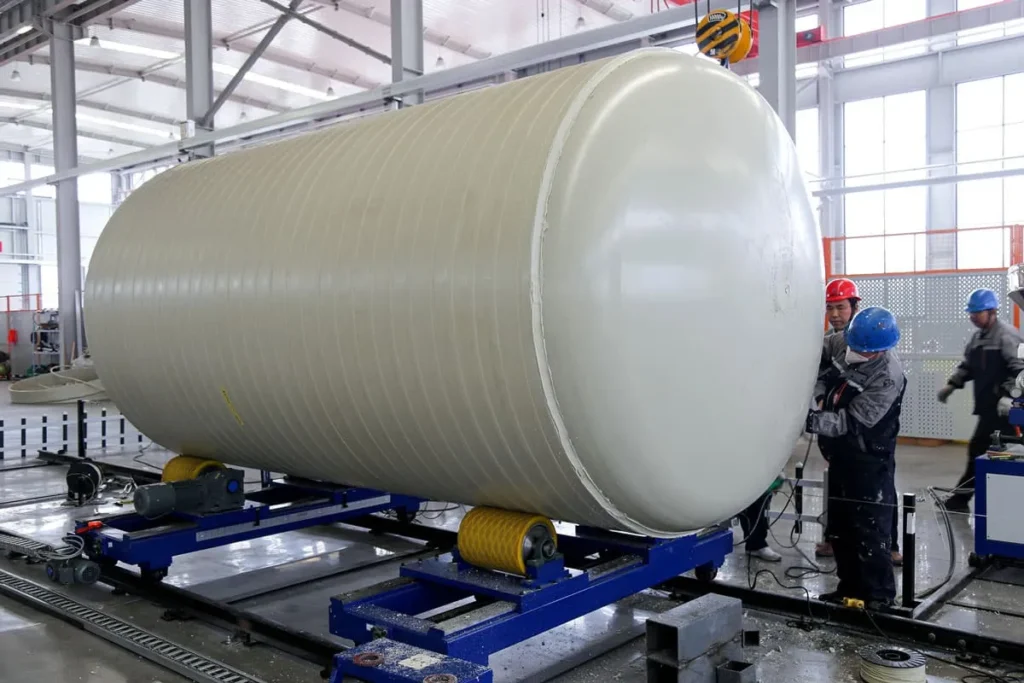
Once treatment duties are established, equipment families can be evaluated against wastewater conditions, construction material, footprint, maintenance and downstream requirements.
| Standard Treatment Role | Relevant Motiva Equipment Family | Main Evaluation Requirement |
|---|---|---|
| DAF separation | GW-Type, YW-Type and QDPP DAF systems | Oil state, suspended solids, floc behavior, corrosion environment and available space |
| Biological treatment and biomass separation | MBBR and MBR treatment systems | Biodegradability, toxicity, salinity, nutrient balance and effluent duty |
| High-rate anaerobic treatment | IC internal circulation anaerobic reactor | Organic load, temperature, inhibition, hydraulic conditions and downstream treatment |
| Catalytic internal-electrolysis and related microelectrolysis evaluation | FCM-IV catalytic self-electrolysis material and SF Series reactors | Wastewater response, pH, contact conditions, downstream separation and bench or pilot testing |
| Catalytic ozonation | SAO3 and SO Series reactors | Ozone demand, mass transfer, catalyst condition, reaction response and downstream duty |
| Mixed-acid concentration or recovery | SE Series | Acid composition, contaminants, material compatibility, recovery value and residual route |
Iron-carbon microelectrolysis is the common term used in international technical literature for iron-carbon systems. Motiva source materials describe FCM-IV and SF products as multi-component catalytic self-electrolysis materials and reactors. These labels should not be treated as exact synonyms without confirming the selected media, mechanism and project conditions.
For a broader project route—including pretreatment, main treatment, polishing and residual handling—review Motiva’s industrial wastewater treatment solutions.
Project Inputs Beyond A Methods Comparison
A methods guide can narrow the technical questions, but final selection requires a project design basis. At minimum, evaluate:
- Wastewater source, production process and whether streams can be segregated
- Average, peak and batch flow patterns
- Representative laboratory data, pollutant form and sampling conditions
- Biodegradability, toxicity, salinity, scaling and corrosion risks
- Required discharge, reuse, recovery or ZLD objective
- Existing units and the reason for any current performance problem
- Site footprint, elevation, climate, utilities and material requirements
- Chemical storage, staffing, maintenance and automation expectations
- Sludge, concentrate, off-gas, spent media and final solids routes
- Supply boundary, construction interface and commissioning requirements
Use the Wastewater Treatment System Selection Guide to connect these inputs to a preliminary treatment route. When preparing an inquiry, the Wastewater Treatment RFQ Checklist helps organize water data, drawings, targets and supply boundaries.
Bench or pilot testing becomes especially important when pollutant response is uncertain, the wastewater varies widely, the process depends on oxidation or catalytic reaction, biological inhibition is possible, membrane recovery is aggressive, or residual disposal could determine project feasibility.
Industrial Wastewater Treatment Methods FAQ
What Are The Main Industrial Wastewater Treatment Methods?
The main engineering families are physical and mechanical separation, chemical and physicochemical treatment, biological treatment, membrane separation, advanced treatment, and thermal or recovery routes. Most industrial systems combine several families.
Why Are Some Sources Based On Three Categories And Others On Six?
Physical, chemical and biological treatment are the traditional categories. A six-family framework separates membranes, advanced processes and thermal or recovery routes because they have distinct mechanisms, operating requirements and residual streams.
What Is The Difference Between A Method, Stage And Treatment Train?
A method describes how treatment works, a stage describes its duty and position, and a treatment train combines multiple units in an ordered route. DAF is a method; pretreatment is a stage; equalization followed by DAF and biological treatment is part of a treatment train.
Which Treatment Methods Address COD?
The answer depends on the form of COD. Separation can remove particulate or oil-associated COD, biological treatment can convert biodegradable COD, and advanced oxidation may transform selected refractory organics. Membranes may separate some dissolved compounds but create a concentrate stream.
Which Methods Are Used For Heavy Metals?
Common duties include source segregation, pH and redox control, chemical precipitation, coagulation, sedimentation or DAF, electrocoagulation, adsorption and ion exchange. Metal species, chelating agents and the required residual concentration determine the route.
What Treatment Is Suitable For High-Salinity Wastewater?
Source segregation comes first. Depending on organics, scaling risk, osmotic pressure and recovery objectives, the route may include pretreatment, nanofiltration or reverse osmosis, evaporation, crystallization or material recovery. Biological treatment can become difficult at inhibitory salinity.
What Affects Industrial Wastewater Treatment Cost?
Major factors include flow and variability, pollutant concentration and form, discharge or reuse target, chemical and energy demand, material selection, automation, staffing, sludge or concentrate disposal, and the reliability margin required by the project.
When Is Pilot Testing Required?
Pilot testing should be considered when reaction response, inhibition, fouling, recovery, scale formation or residual quality cannot be established confidently from representative laboratory data and comparable operating evidence. Advanced oxidation, catalytic processes, difficult biological wastewater and aggressive membrane or recovery targets often justify testing.
Send Water Data For Treatment Route Review
Send the wastewater source, flow pattern, recent laboratory data, discharge or reuse target, site constraints and any existing process information. Motiva can review the required treatment duties before discussing equipment configuration.
The shared Motiva RFQ / Water Data Form keeps the wastewater data, project target and requested treatment review in one inquiry.
Technical References
- U.S. EPA Industrial Wastewater Treatment Technology Database: Treatment Technologies
- U.S. EPA Industrial Wastewater Treatment Technology Database Overview
- U.S. EPA IWTT Database Scope And Data Quality
- U.S. EPA Background On Preliminary, Primary, Secondary And Tertiary Treatment Terminology
- Primary Study Using Iron-Carbon Microelectrolysis As A Wastewater Pretreatment Process
- Review Of Iron-Carbon Microelectrolysis Technology In Wastewater Treatment
Technical references provide terminology and treatment background. Project design still requires representative water data, a defined treatment target and an evaluation of the complete water and residual-stream balance.