Acidic Wastewater Treatment For
Corrosive
Industrial Streams
pH, acid type, metals, salts, temperature and recovery value decide whether the route starts with neutralization, membrane or resin recovery comparison, SE concentration, corrosion-resistant materials or a ZLD branch.
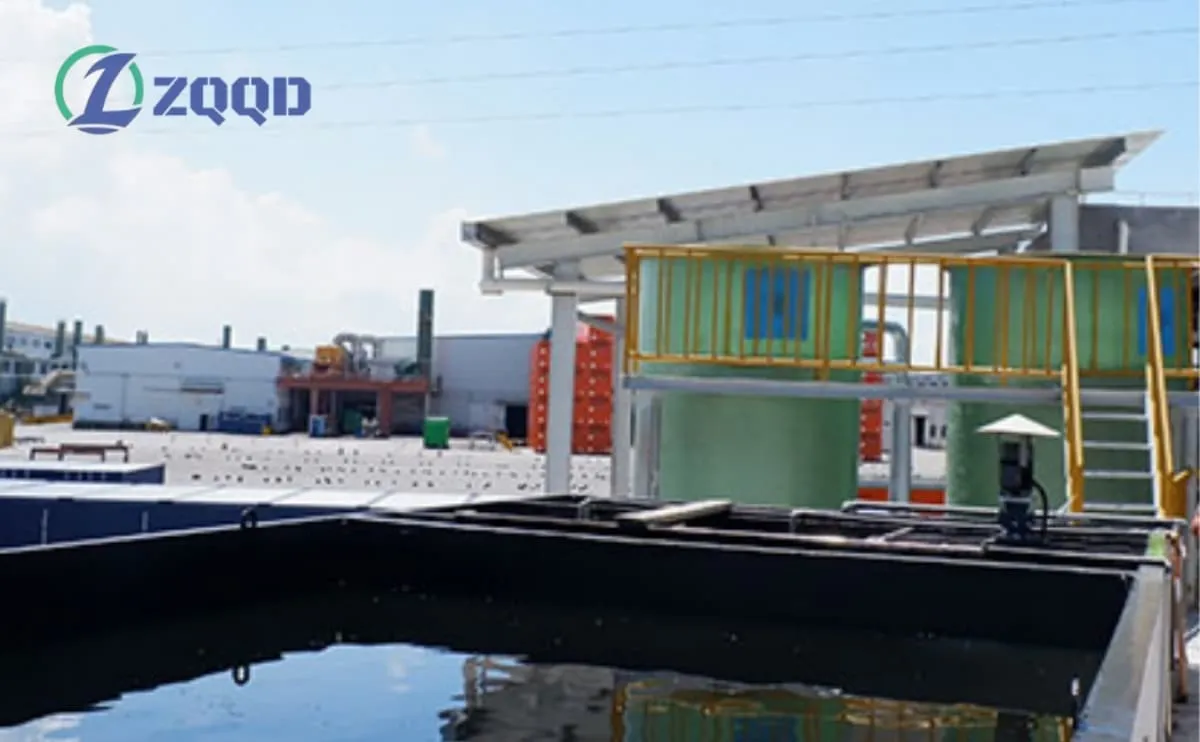
Acidic Streams Need More Than A Standard Wastewater Line
Corrosion, metals, dissolved salts, process chemicals and acid value decide whether a project is a neutralization route, a recovery route or a concentrate-handling route.
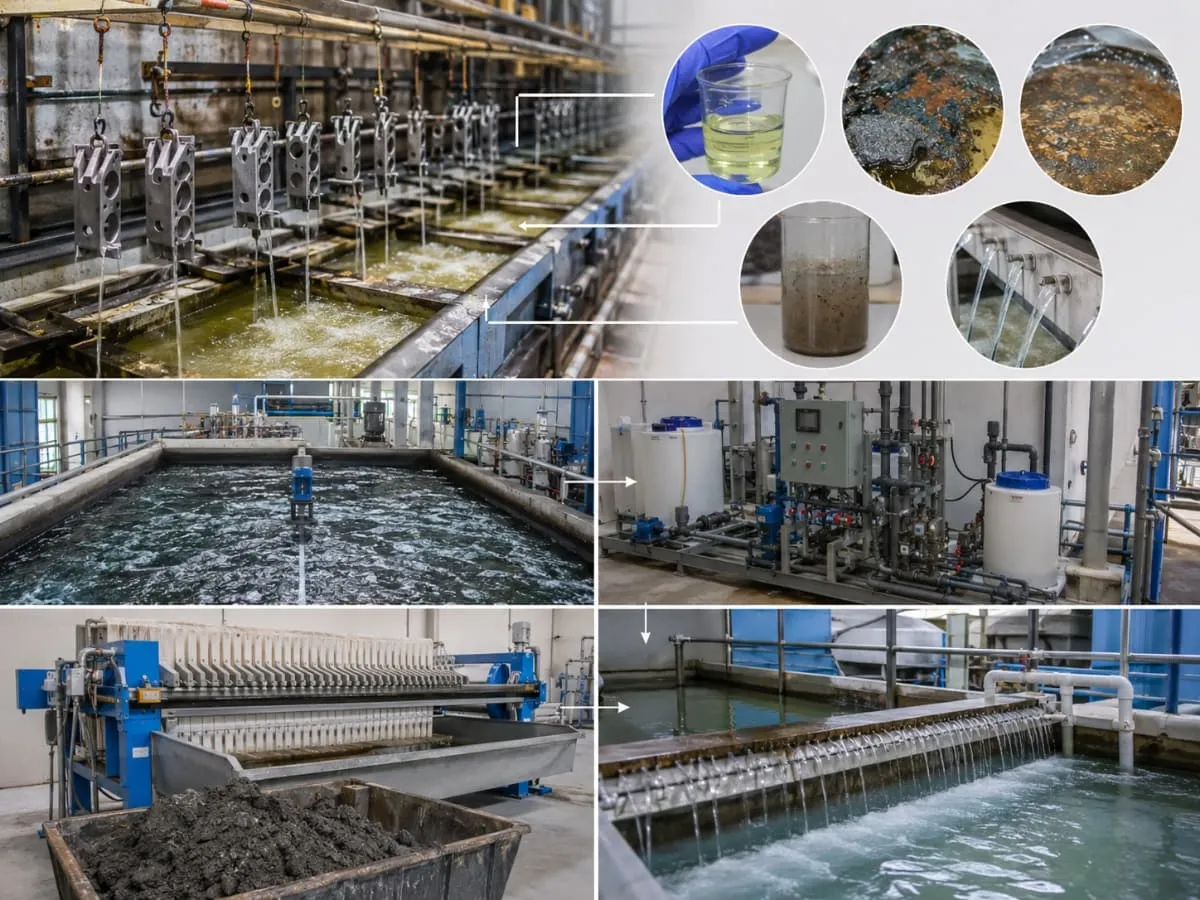
Surface Treatment And Pickling Wastewater
Acid type, dissolved metals, suspended solids and rinse-water variation decide the first separation and conditioning step.
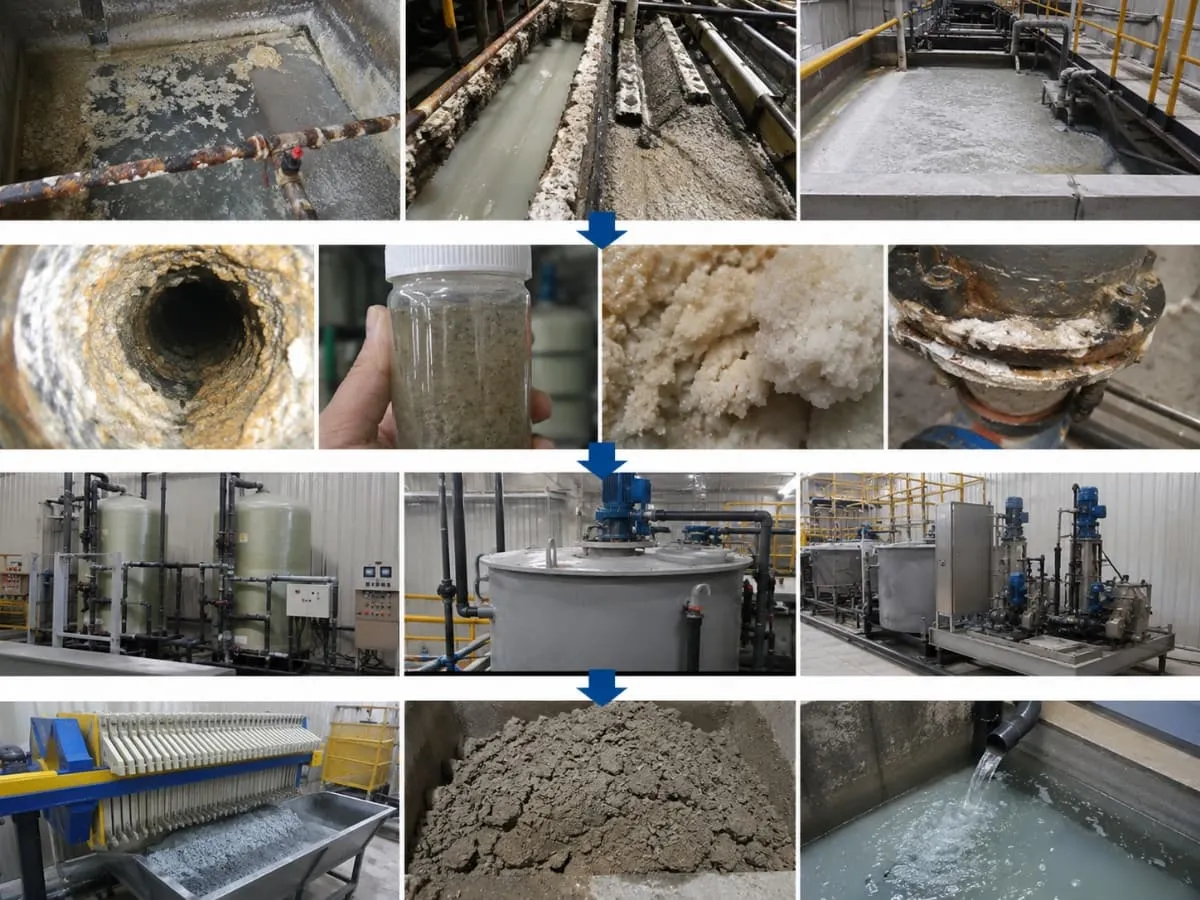
Acidic Streams With Solids And Salts
Solids, fluoride or sulfate risk, salinity and scaling tendency can change both pretreatment and material choices.
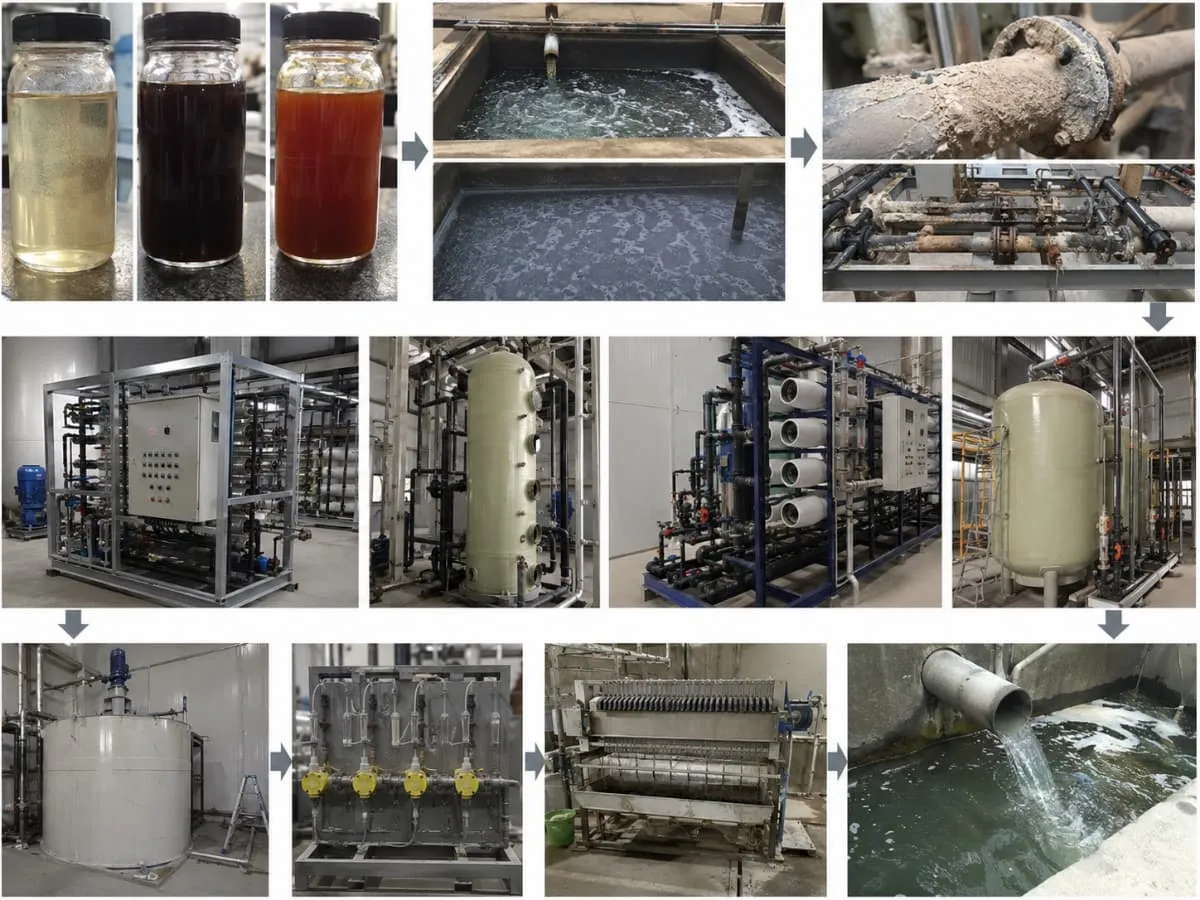
Waste Acid, Mixed Acid And Process Effluent
High-value acid streams may be reviewed for recovery before ordinary neutralization or disposal routes are selected.
Water Data That Changes Acidic Wastewater Treatment
Early equipment scope becomes clearer when the inquiry includes both ordinary wastewater indicators and acid-specific operating signals.
List pH range, acid type, concentration, bath or rinse source and batch discharge timing.
Metals, conductivity, chloride, sulfate and TDS affect precipitation, corrosion and concentrate handling.
Organic load and toxicity decide whether catalytic pretreatment or oxidation belongs before biological treatment.
The target decides how far neutralization, polishing, acid recovery or ZLD evaluation must go.
From Corrosive Stream To Treatment Scope
The route starts with source separation and material review before equipment sizing. Acid recovery and ZLD branches should be evaluated only when the water data and project target justify them.
Classify The Acid Source
Separate bath dump, rinse water, mixed acid, metal-bearing effluent and cleaning wastewater where possible.
Define Recovery Or Neutralization
Acid value, contaminants, flow and reuse pressure decide whether recovery is practical before conventional treatment.
Select Core Reactors And Materials
SE Series, dosing, precipitation, DAF, filters, oxidation and corrosion-resistant tanks each carry different roles.
Confirm Concentrate And Sludge Route
High salt, metals and recovered acid streams need a practical handling plan before final system sizing.
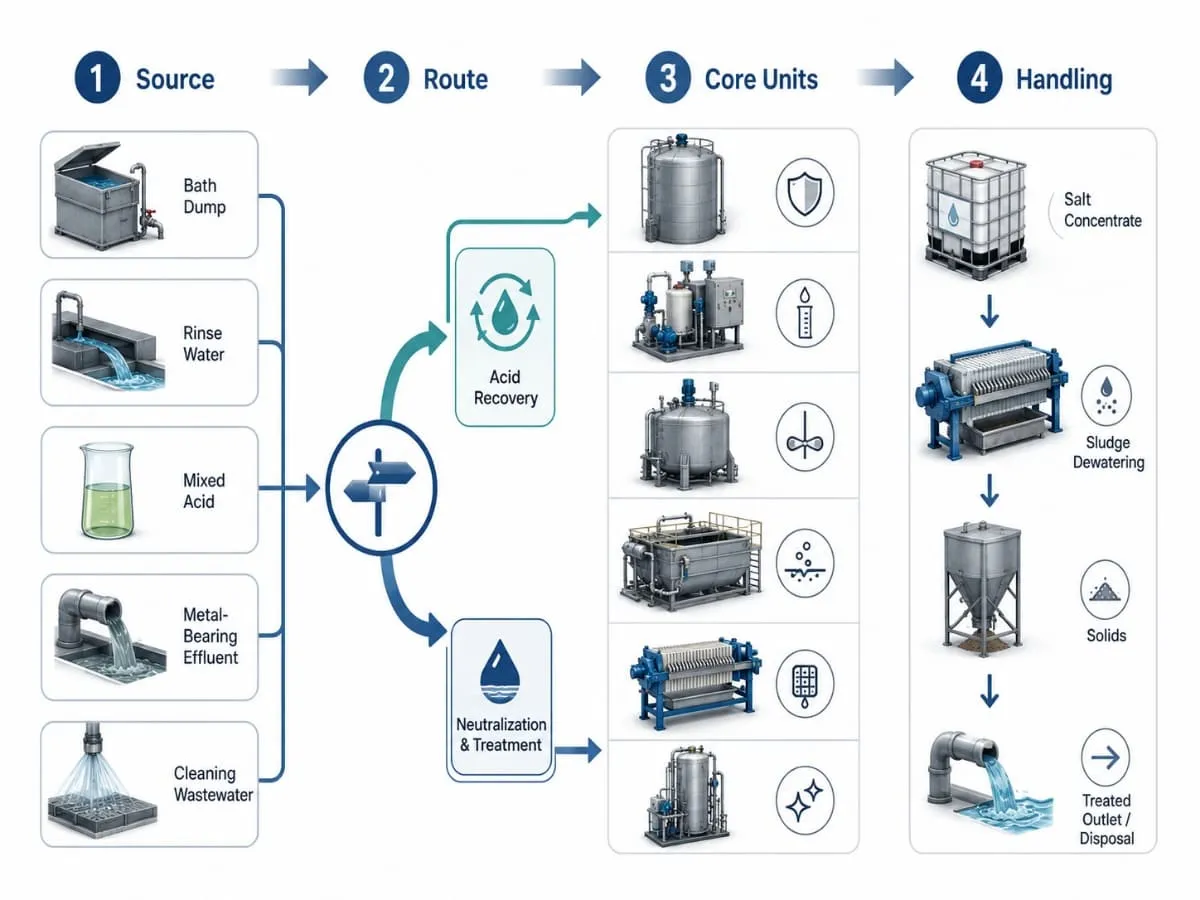
Treatment Routes Change With Acidic Water Conditions
Final sizing, materials, power and process configuration depend on acid type, concentration, flow, temperature, metals, TDS, site conditions and discharge or recovery targets.
Numbers That Shape The First Route Review
Early comparison needs working ranges, but final recovery, outlet quality, material choice and operating cost still depend on the water sample, acid profile, site conditions and reuse target.
Published diffusion-dialysis references commonly report normal acid recovery in this range, with 70-90% removal of dissolved metals for suitable waste-acid streams.
SE Series documentation describes electromagnetic activation and ambient-pressure evaporation, with water-cluster change and anti-scaling design reviewed for high-value mixed acid.
Motiva PP / QDPP references list polypropylene density, elastic modulus above 1500 MPa and 10-80 mm wall-thickness options for tank review.
SAO3-II catalytic ozonation test data changed COD from 130 mg/L to 51 mg/L after 40 minutes with ozone dosage around 50 mg/L under listed test conditions.
SF and SO references state upper COD or ammonia-nitrogen removal ranges for suitable difficult wastewater. These values are not acid recovery rates.
For U.S. hazardous-waste screening, corrosivity includes aqueous waste at these pH thresholds or liquid that corrodes steel above the listed rate.
Neutralization And Precipitation
Fits low-value or highly contaminated acid streams where metal precipitation, pH adjustment, sludge handling and final polishing matter more than acid reuse.
Diffusion Dialysis
Often evaluated for pickling, plating, anodizing or metal-finishing baths where free acid can be separated from dissolved metals by anion-exchange membranes.
Acid Retardation
Uses ion-exchange resin behavior to separate free acid from metal salts, then elutes the retained acid with water for reuse or further conditioning.
SE Low-Temperature Evaporation
Reviewed for suitable waste acid and mixed acid where concentration, anti-scaling design, corrosion-resistant materials and concentrate handling drive the project.
ZLD Or Brine Handling
Becomes relevant when discharge is restricted, acid recovery leaves residual salts, or concentrate and sludge need a controlled disposal or reuse path.
Equipment Roles Around Acidic Wastewater
Acidic streams often need a route made from core recovery or conditioning units plus separation, polishing and corrosion-resistant structures around them.
SE Series Mixed Acid Recovery
Reviewed for suitable waste acid and mixed acid streams where low-temperature evaporation, concentration and anti-scaling design may fit the project.
Dosing, Reaction And Precipitation
Neutralization, precipitation and coagulation steps depend on pH, metals, sludge handling and downstream separation requirements.
DAF, Filters And Sedimentation
When flocs, oil, suspended solids or precipitates are present, separation equipment protects polishing units and improves route stability.
Corrosion-Resistant Tanks And Transfer Scope
QDPP, PP and related material choices should be reviewed when corrosive wastewater, site atmosphere or chemical compatibility drives the system design.
Catalytic Pretreatment And ZLD Branches
FCM-IV / SF and SAO3 / SO routes can be reviewed for refractory COD, color or difficult organics. ZLD needs separate salt, concentrate and scaling review.
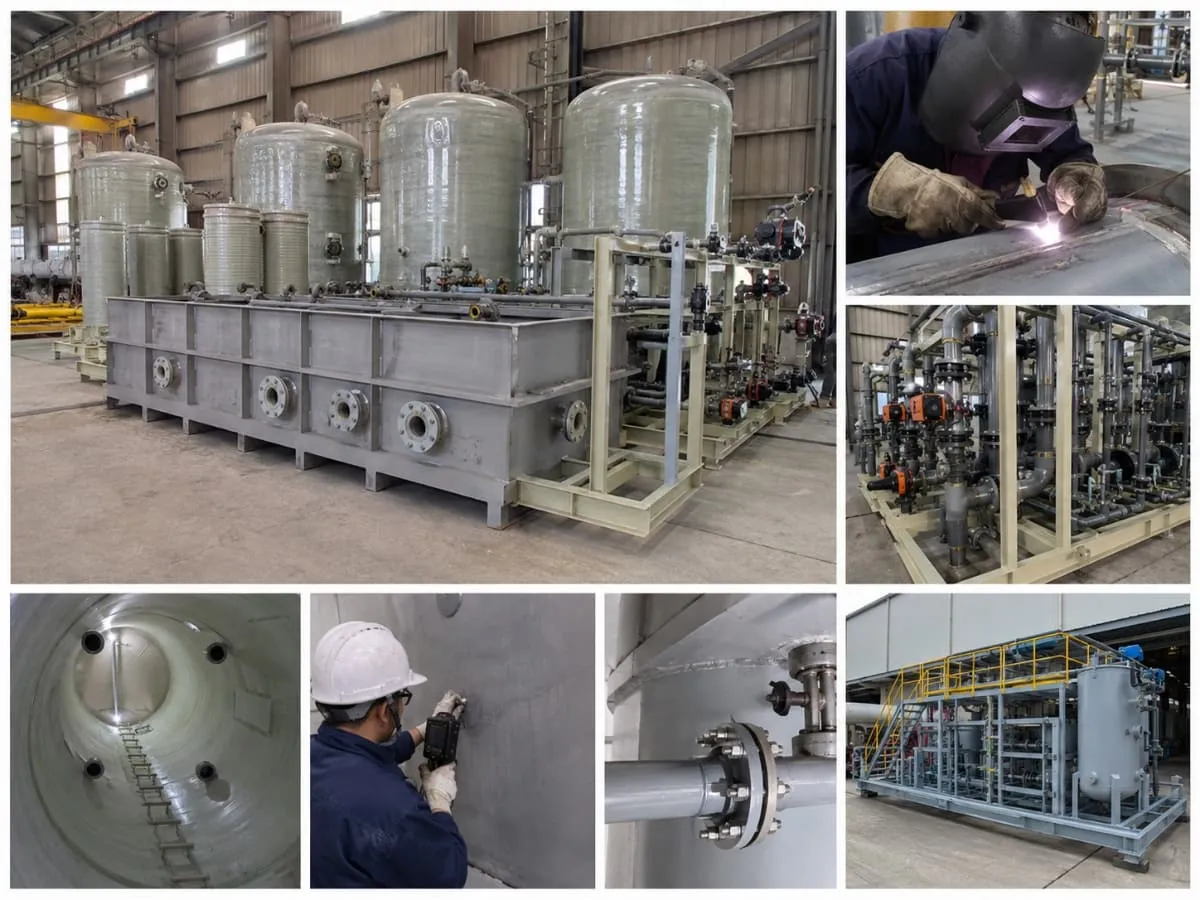
Equipment Scope For Corrosive Routes
Workshop equipment, corrosion-resistant tanks, reactors, pipe skids, welding details and inspection photos all help confirm the delivery form.
Material And Scaling Checks Before Final Sizing
Acidic wastewater design is not only a process decision. The material, welding method, tank form, transfer path and scaling risk affect the equipment scope from the beginning.
The reference points above support first comparison only. Final dimensions, power, material grade, operating cost, acid recovery and treatment route are confirmed after wastewater and project review.
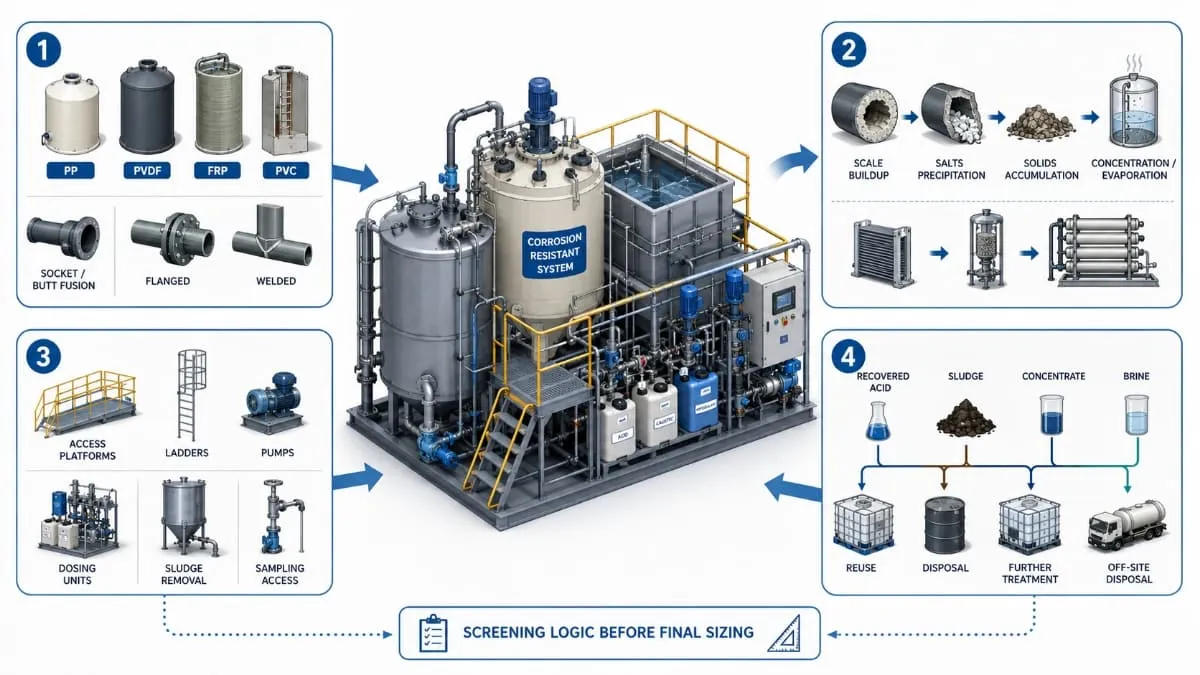
Corrosive Streams Need More Than Process Sizing
Acid recovery and neutralization projects also need chemical handling, containment, ventilation, operator access and waste-path review before equipment is finalized.
Very low pH, corrosivity, metals, fluoride, chloride, sludge and concentrate can change local waste classification and disposal responsibilities.
Review secondary containment, floor slope, drain isolation, emergency storage, tank overflow path and chemical unloading area.
Ventilation, sampling points, maintenance access, cleaning ports, PPE zones and pump isolation need to match the acid and site layout.
Local permits, chemical lists, SDS, emergency response, operator training and sludge or concentrate path should be reviewed before final quotation.
Prepare A Practical Acidic Wastewater RFQ
The most useful inquiry connects water chemistry with site constraints and the business target: neutralize for discharge, recover acid, reduce hazardous load, reuse water or evaluate ZLD.
Send The Acid Profile
Include pH, acid type, concentration, flow, temperature, COD, metals, TDS, chloride, sulfate and visible solids.
Share Layout And Material Needs
Tank location, corrosion atmosphere, lifting conditions, footprint and maintenance access affect equipment form.
Define The Outlet Or Recovery Goal
Discharge, reuse, acid recovery and ZLD targets lead to different system depth and operating inputs.
Send Acidic Wastewater Data For Route And Equipment Review
Send one set of project inputs, and our team can route it to acid recovery, neutralization, advanced treatment, corrosion-resistant equipment or ZLD review without asking you to restart the inquiry.
Acidic Wastewater Treatment Questions
These answers keep early scoping practical before final water testing, route selection and equipment sizing.
Is acidic wastewater always treated by neutralization?
No. Neutralization is common, but high-value acid streams, high salinity, metals, difficult organics or recovery targets can lead to acid recovery, catalytic pretreatment or ZLD review.
When does acid recovery fit?
Acid recovery fits when acid concentration, contamination level, reuse value, disposal cost and project scale support recovery before ordinary treatment.
Where does SE Series fit?
SE Series is reviewed for suitable waste acid or mixed acid streams where low-temperature evaporation, acid concentration and anti-scaling design may support the project target.
Is evaporation the only acid recovery route to compare?
No. Diffusion dialysis, acid retardation, neutralization, SE low-temperature evaporation and ZLD branches can all be compared. The right route depends on acid type, metals, concentration, reuse value and disposal pressure.
What numbers affect acid recovery payback?
Useful numbers include acid purchase cost, recoverable acid rate, metal separation, daily flow, bath dump frequency, neutralization chemical cost, sludge disposal cost, energy use and maintenance access.
Does acidic wastewater need special materials?
Often yes. Acid type, concentration, temperature, salinity and site atmosphere affect PP, lined steel, glass-lined, fluoropolymer-lined or alloy material review.
When does ZLD become part of the discussion?
ZLD becomes relevant when discharge is restricted, salts or concentrate need controlled handling, water reuse is required, or acid recovery leaves a stream that still needs final concentration.
What data is needed for an early proposal?
Useful inputs include flow, pH, acid type, metals, COD, TDS, chloride, sulfate, temperature, current process, target, site layout and available water-quality reports.
Ready To Define The Acidic Wastewater Route?
Send the available water data first. Missing values can become a sampling and testing list before final process and equipment selection.