Leachate Treatment System For High-Strength Wastewater
Landfill, waste incineration and hazardous waste leachate carry changing COD, ammonia, salinity, color, metals, PFAS concerns and refractory organics. The treatment route starts with influent data, then defines pretreatment, catalytic oxidation, biological polishing, filtration and concentrate handling.
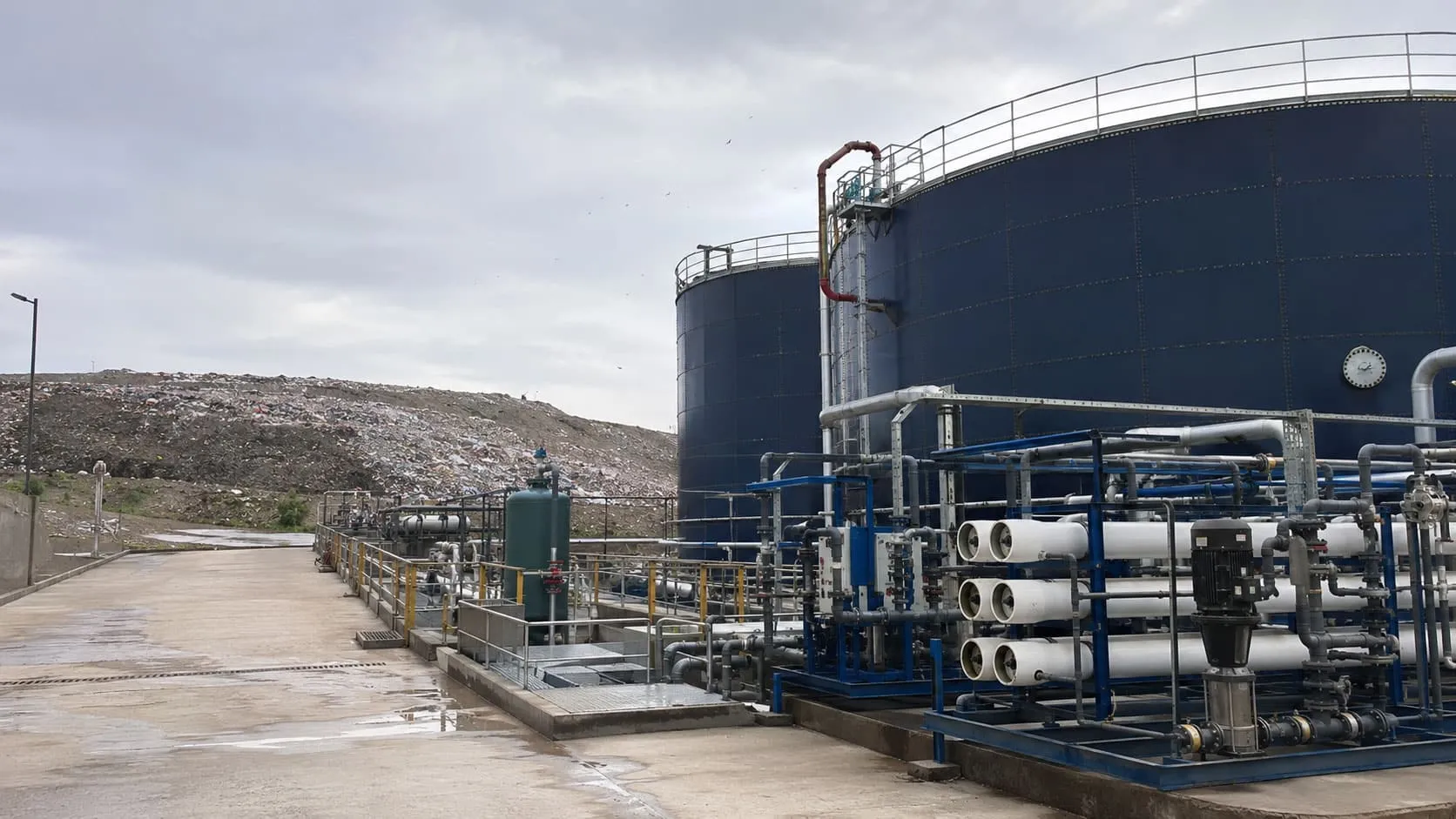
Leachate Routes Change With Waste Source And Concentrate Duty
The same word leachate covers very different water. Source segregation, age, rainfall, waste composition, recirculation and upstream pretreatment shape the process route before equipment sizing begins.
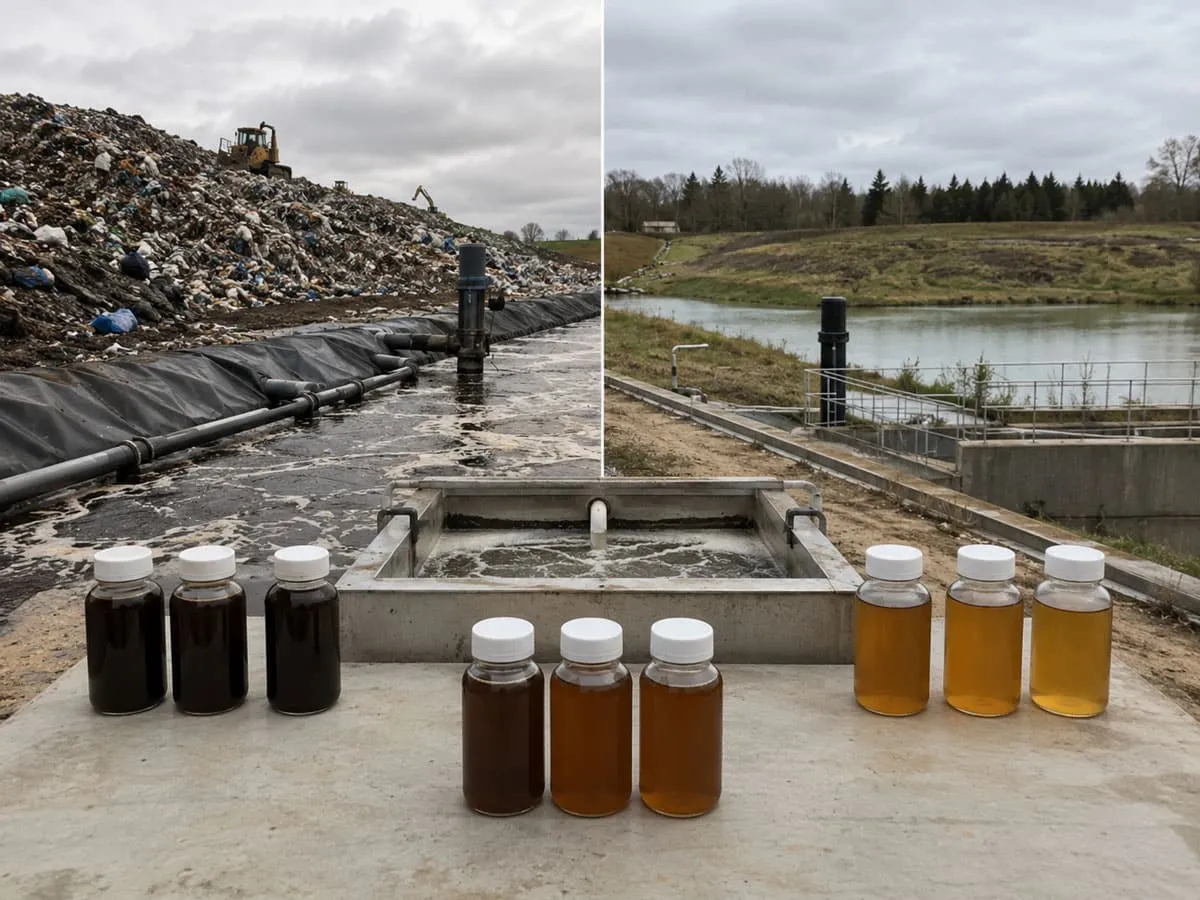
Old And Young Landfill Leachate
COD, ammonia, biodegradability, salinity, PFAS screening needs and color shift with landfill age, rainfall and recirculation. Equalization and test work define the oxidation and biological split.
Define Water Data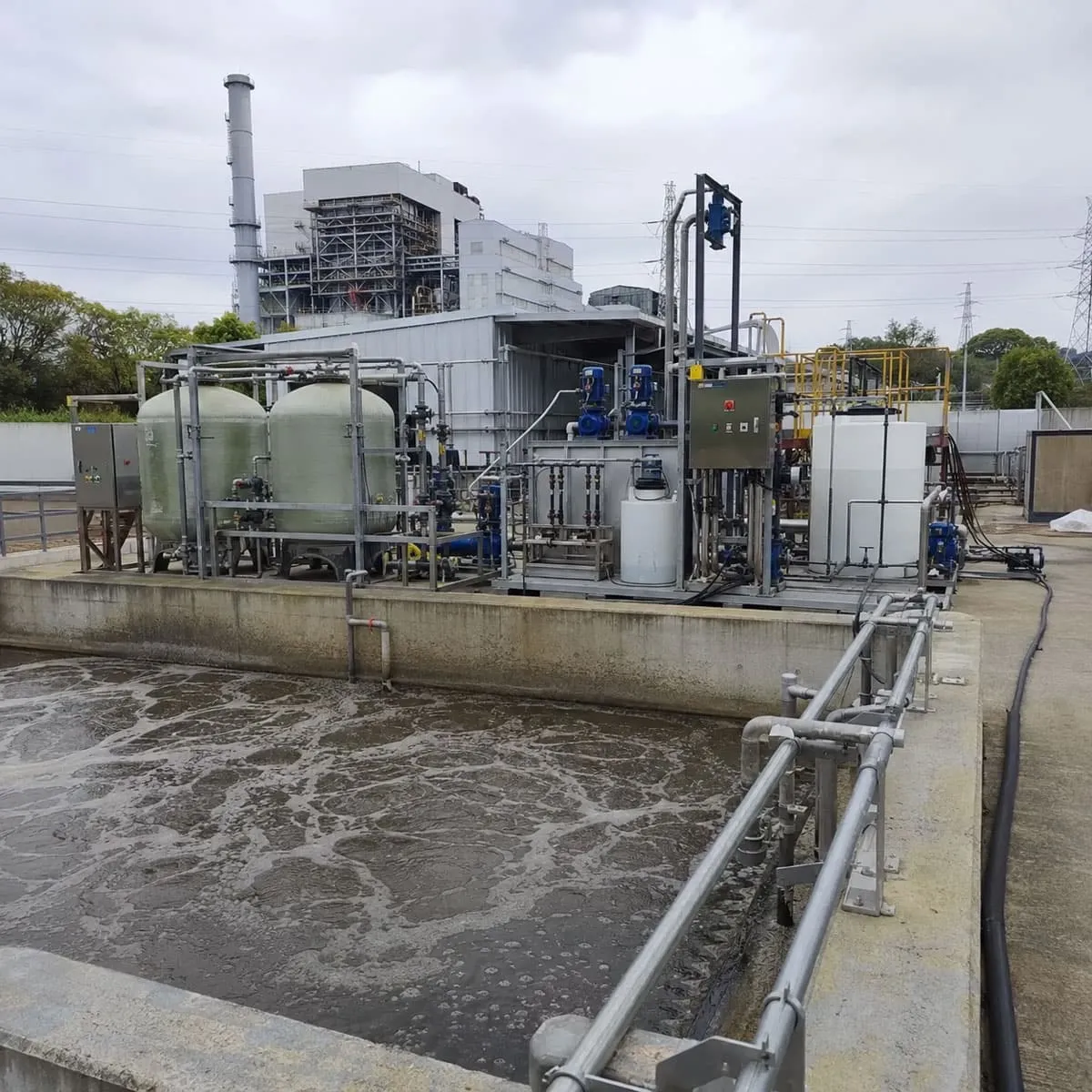
Waste Incineration Leachate
Circulation wastewater and leachate from waste incineration plants often need oxidation, nitrogen control, salt checks and polishing around the existing plant operation.
Compare Process Route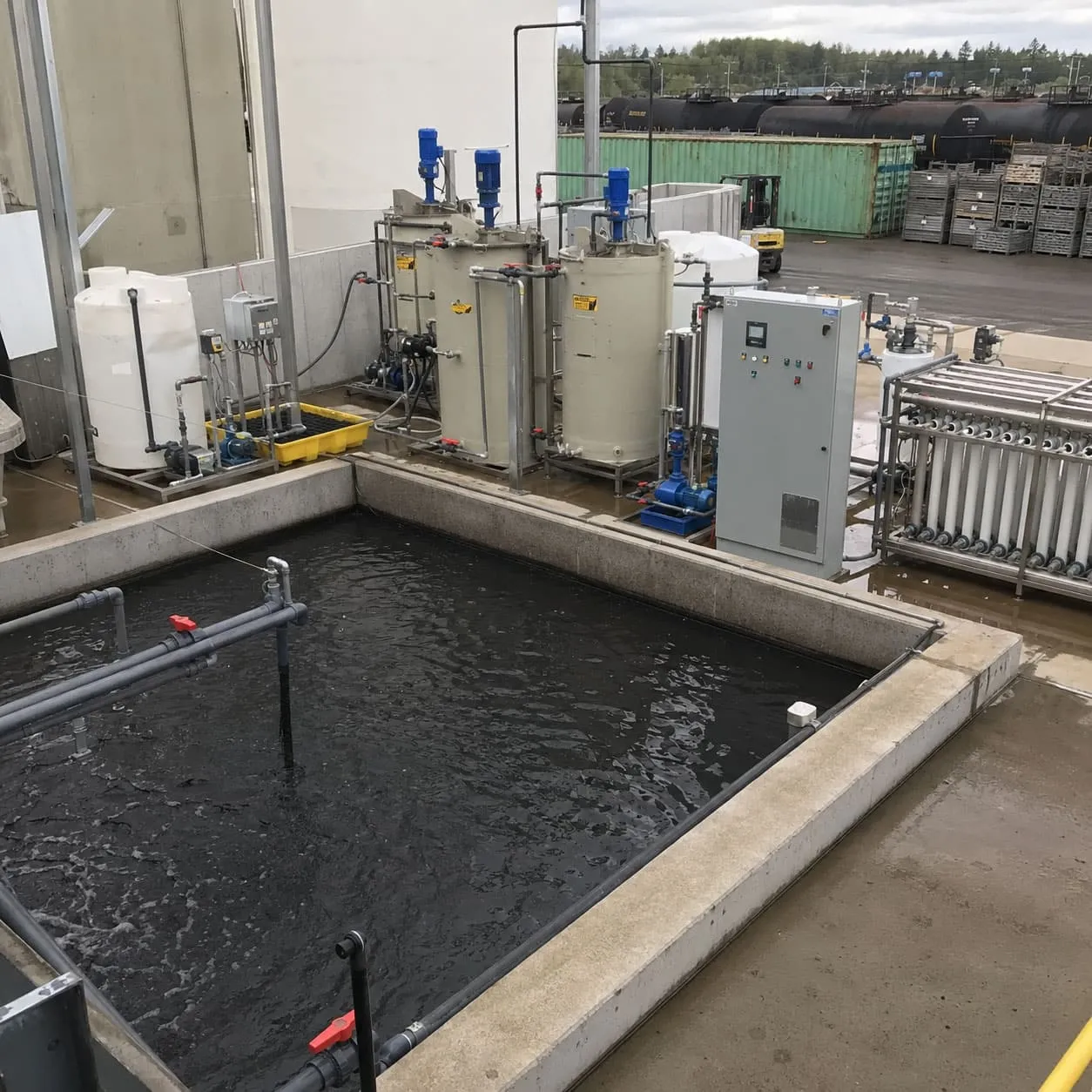
Hazardous Waste Leachate
Toxicity, metals, chloride, pH swings and refractory organics drive stronger pretreatment and advanced oxidation checks before biological or membrane polishing.
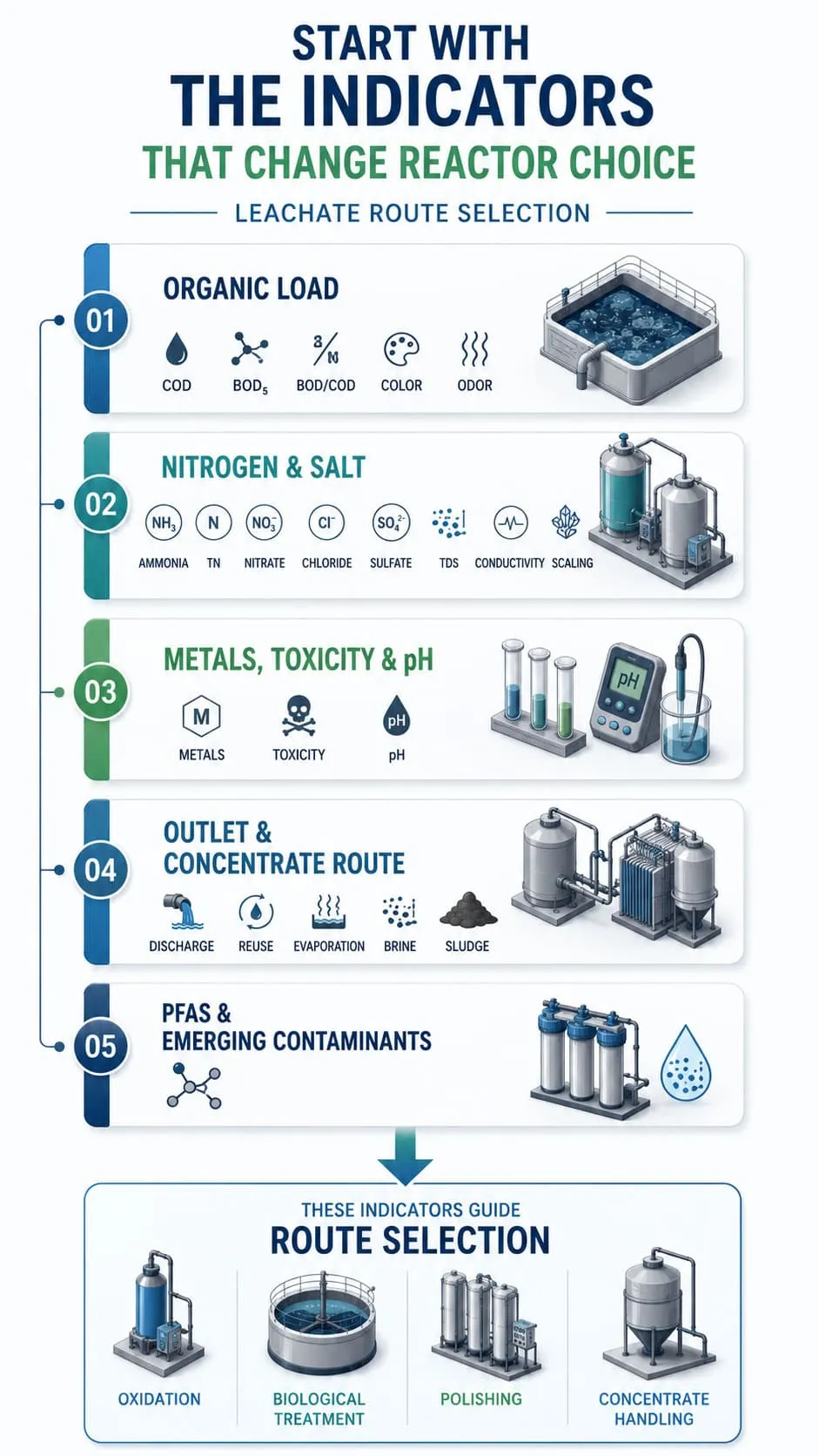
Evaluate Oxidation FitStart With The Indicators That Change Reactor Choice
Leachate system sizing is driven by water quality and disposal target, not a fixed equipment list. Send measured data where available and mark seasonal or batch variation separately.
PFAS, Discharge Permits And Disposal Targets Belong In Early Route Discussions
PFAS and local regulatory targets change the treatment route because some streams need segregation, concentration control, permitted discharge, off-site disposal or a defined destruction pathway instead of ordinary biological treatment alone.
Check PFAS Before The Route Is Fixed
PFAS, short for per- and polyfluoroalkyl substances, affects landfill leachate discussions when regulators, receiving facilities or downstream disposal partners require analytical data.
Name The Required Outlet Path
Project targets often refer to local discharge permits, sewer acceptance limits, landfill leachate rules, reuse requirements or concentrate disposal agreements.
Define Outlet TargetPlan The Concentrated Stream
PFAS-bearing leachate or membrane concentrate needs a defined handling route. ZLD, evaporation, crystallization, hauling or approved disposal depends on the project location and waste profile.
Evaluate ZLD RouteFrom Equalization To Oxidation, Biological Polishing And Concentrate Handling
A practical leachate route separates shock buffering, suspended solids, refractory organics, nitrogen, membrane or filtration polishing, and brine duty into clear treatment stages.
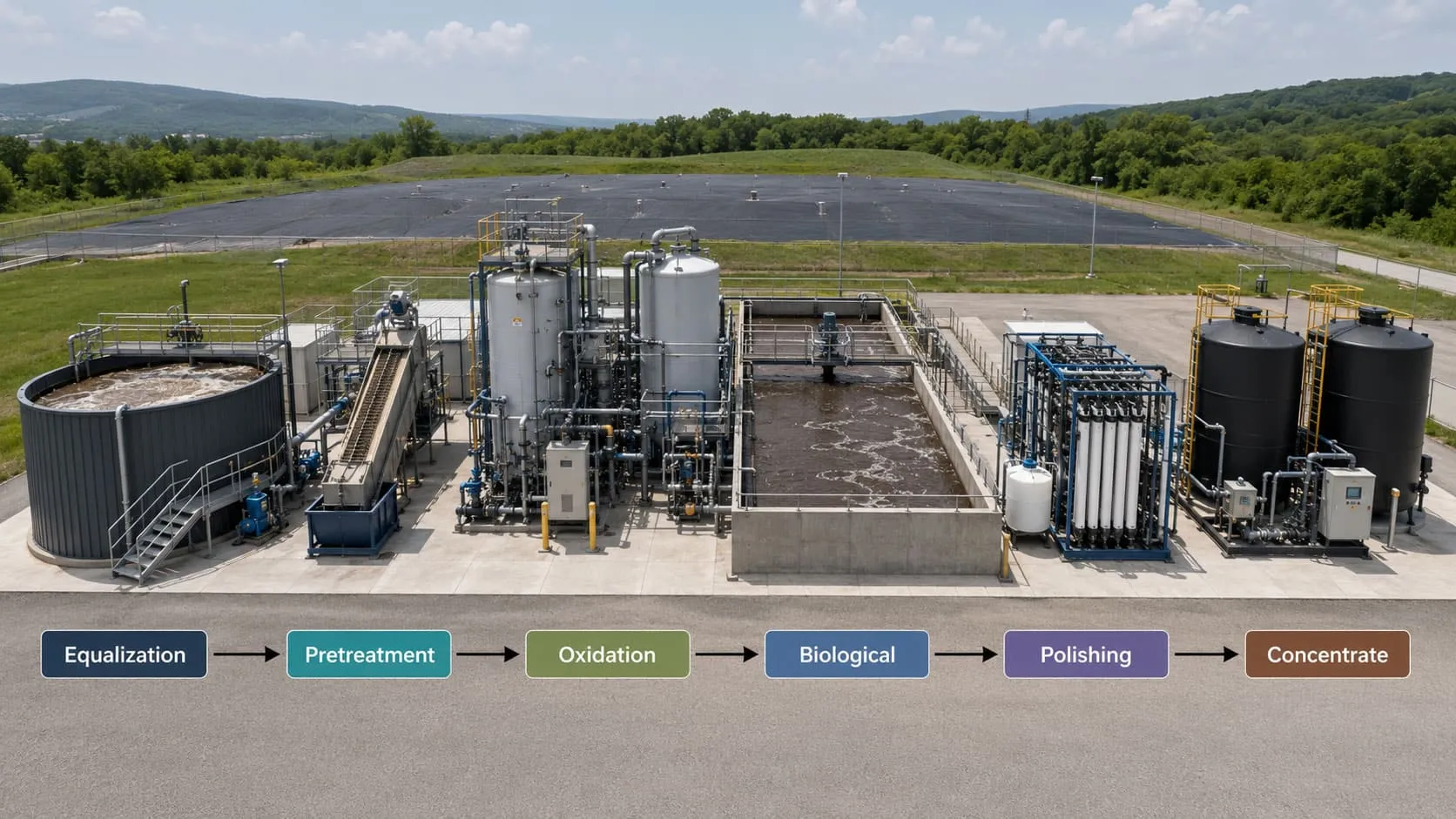
Collect And Equalize
Balance flow, pH, shock load, solids and seasonal fluctuation before chemical or biological stages.
Pretreat Solids
Use screening, sedimentation, DAF or dosing where SS, oil, colloids or metals disturb downstream units.
Break Refractory Load
Apply catalytic self-electrolysis or catalytic ozonation after water tests confirm the fit.
Treat Biologically
Use biological treatment where biodegradability, toxicity and nitrogen load support stable operation.
Polish Effluent
Filtration, oxidation, membranes or adsorption fit the outlet target and remaining pollutant profile.
Handle Concentrate
RO concentrate, brine, sludge and evaporator residues need a defined route before final sizing.
Treatment Routes Change With Leachate Water Quality
The matrix links common leachate conditions to practical treatment directions. Exact removal values, PFAS handling, chemical dosage, energy use and final outlet results are confirmed after testing and design calculation.
Special Process Names Need Plain Engineering Labels
Leachate projects often involve regional process names and internal series names. Pairing each name with a common treatment principle keeps the discussion clear for engineering and procurement teams.
SFAO3 Treatment Route
SFAO3 is a Motiva leachate route name. For public engineering discussions, the route is described by its treatment functions: coupled oxidation, biological treatment and advanced polishing.
FCM-IV / SF Series
Iron-carbon micro-electrochemical pretreatment targets refractory organics, color, metal-related redox reactions and biodegradability improvement under suitable wastewater conditions.
SAO3 / SO Series
Ozone catalytic oxidation targets residual organic pollutants after pretreatment or biological treatment. Test data belongs to the listed test condition, not every leachate source.
ZLD Or Concentrate Handling
High-salt leachate and membrane concentrate require a separate brine route. Evaporation, crystallization and disposal decisions depend on TDS, scaling risk and project target.
Reference Data For Early Process Evaluation
The reference values below support early route comparison only. Final reactor selection, dosage, contact time and treatment performance depend on wastewater testing and project-specific design.
Leachate Systems Combine Core Reactors With Pretreatment And Polishing Units
High-strength leachate rarely fits one unit. The equipment scope changes with source segregation, water tests, outlet target, material requirements, corrosion risk and site layout.
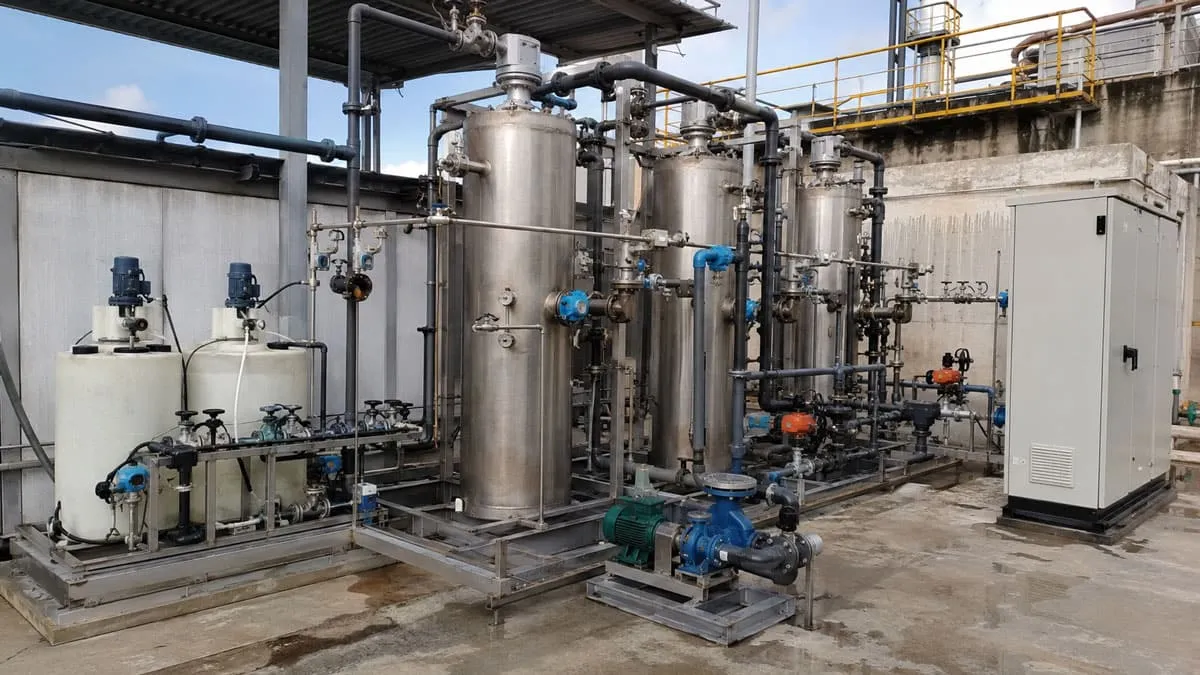
Catalytic Reactors
FCM-IV, SF, SAO3 and SO discussions focus on difficult organics, color, toxicity, metals and polishability after lab or pilot tests define the route.
Define Oxidation Role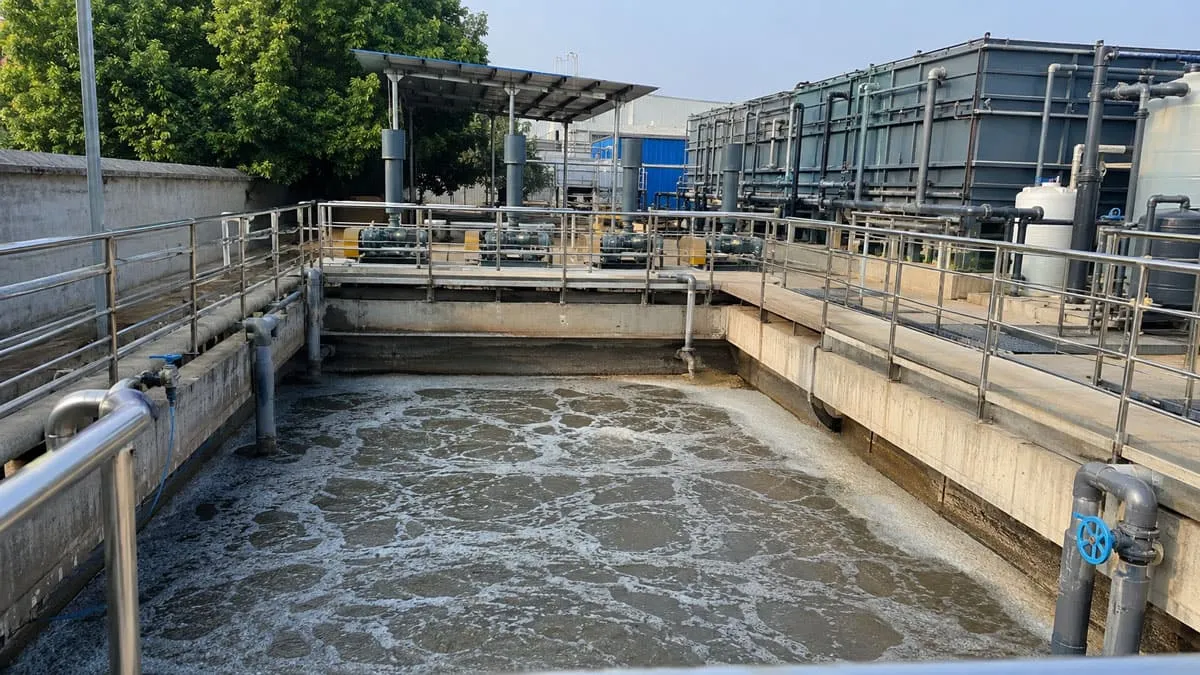
MBR, MBBR And Aerobic Treatment
Biological treatment fits when toxicity, salinity, biodegradability and nitrogen load support stable operation after equalization and pretreatment.
Compare Biological Routes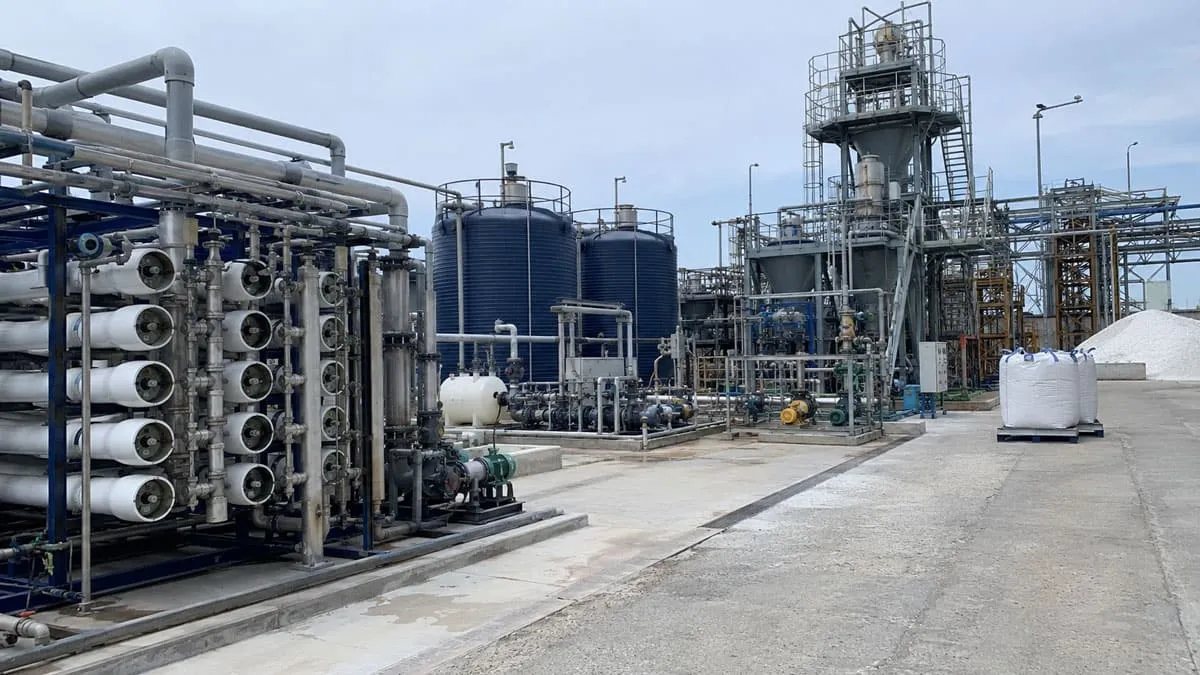
ZLD And Brine Handling
High TDS, membrane concentrate, scaling tendency and disposal limits determine whether the route includes concentration, evaporation or crystallization.
Evaluate ZLD Route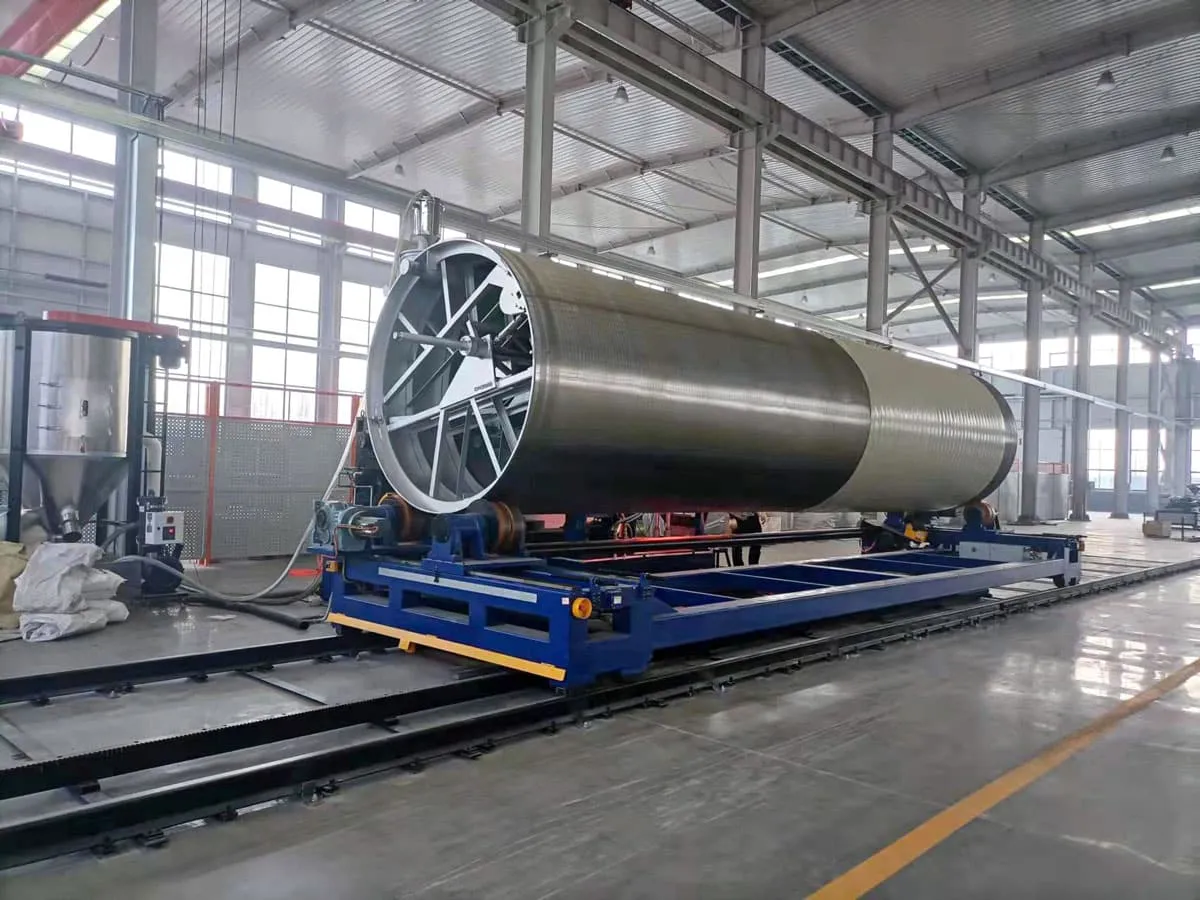
Manufacturing, Drawings And Startup Inputs Stay Connected To The Route
Our team connects process selection with equipment fabrication, material choices, skid or tank layout, delivery limits and site installation inputs. Final supply scope is defined from water data, layout and outlet target.
Prepare Leachate Water Data For Route Selection
Send one set of project inputs for source type, flow, water-quality indicators, PFAS data, outlet target, existing process, concentrate duty and site limits. The same Motiva RFQ / Water Data Form supports leachate, ZLD, advanced oxidation and equipment selection discussions.
Leachate Treatment System Questions
Early answers depend on source type, pollutant profile, outlet target, available footprint and concentrate path.
Ready To Define A Leachate Treatment Route?
Send source type, water-quality data, flow profile and target so the route starts from real design inputs.